 CaliVapeKing
Brand Story · Founded 2007 · San Francisco, CA
PAX
Two Stanford Product Design students decided vaporizers should look as good as everything else in your pocket. That was 2007. PAX has been the most design-forward vaporizer brand ever since.
"We thought vaporizers should be as well-designed as everything else in your pocket. Nobody had treated them that way yet."
— James Monsees & Adam Bowen, co-founders
The Origin — Stanford Product Design, 2007
PAX began as a Stanford graduate product design thesis project. James Monsees and Adam Bowen were studying at Stanford's renowned Product Design program when they identified a product category desperately in need of serious design attention: vaporizers. Every device on the market in 2007 looked like medical equipment or a piece of lab gear. Nobody was treating the vaporizer as a consumer object worth designing well.
They founded a company called Ploom and spent years on the product before the PAX 1 launched in 2012. The PAX 1 was immediately different — a smooth aluminum pebble with a single button and a magnetic mouthpiece. It looked like something Apple would have made if Apple made vaporizers. The design community noticed. The vaping community noticed. The PAX 1 sold out and set the aesthetic standard for every premium portable that came after it.
Monsees and Bowen eventually split the company's product lines — PAX became the dry herb vaporizer brand, and JUUL (the e-cigarette) became a separate entity. PAX Labs continued refining the herb vaporizer line under CEO Tim Surber after the founders moved to other projects. The design DNA — minimalist form, single-button interface, premium materials — has remained consistent across every PAX generation.
The Philosophy — Design First, Function Follows
PAX's product philosophy is explicitly borrowed from consumer electronics — specifically Apple. The belief is that design and function are not trade-offs: the right design makes the product more functional, not less. The single-button interface is the expression of this. Every PAX device, from the Mini 2 to the PAX 3, is controlled by one button and a few simple gestures. The complexity lives in the software and the app, not in the hardware interface.
The 10-year warranty is also a design statement. PAX builds hardware expected to last a decade and backs that expectation with a warranty longer than any other vaporizer brand. It's the same philosophy as buying a quality mechanical watch versus a cheap digital one — the premium object is built to outlast the alternatives.
Where They Are Now
PAX's current lineup spans the Mini 2 ($149) and Flow ($149) at the entry level, through the PAX 3 and PAX Plus at the mid-range. Each product maintains the single-button interface, premium aluminum construction, and 10-year warranty. The app integration has gotten significantly better — real-time temperature data, custom dosing modes, and a game (yes, a game) hidden in the device for those who find it. PAX is still the most design-forward brand in dry herb vaporizers.
CVK Reviews — Every Product We've Tested
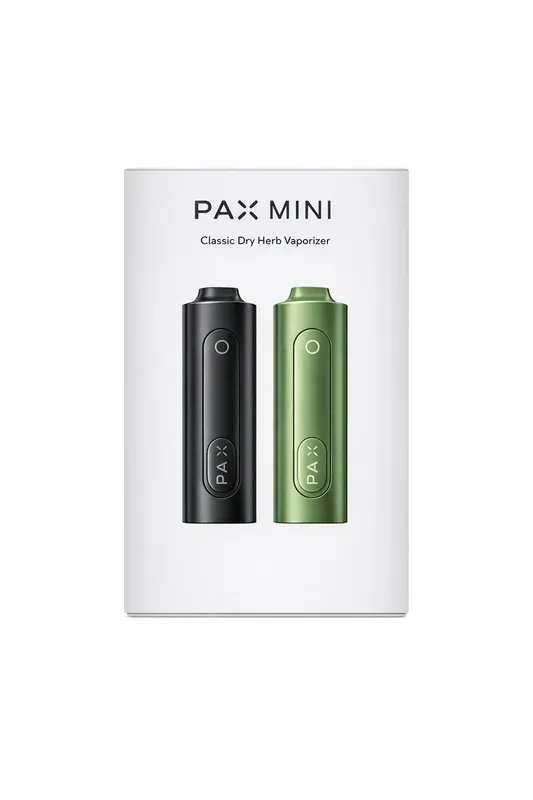
PAX Mini 2
★ 7.8/10The right entry point into PAX. One button, 22-second heat-up, haptic feedback, 10-year warranty. Best under $150.
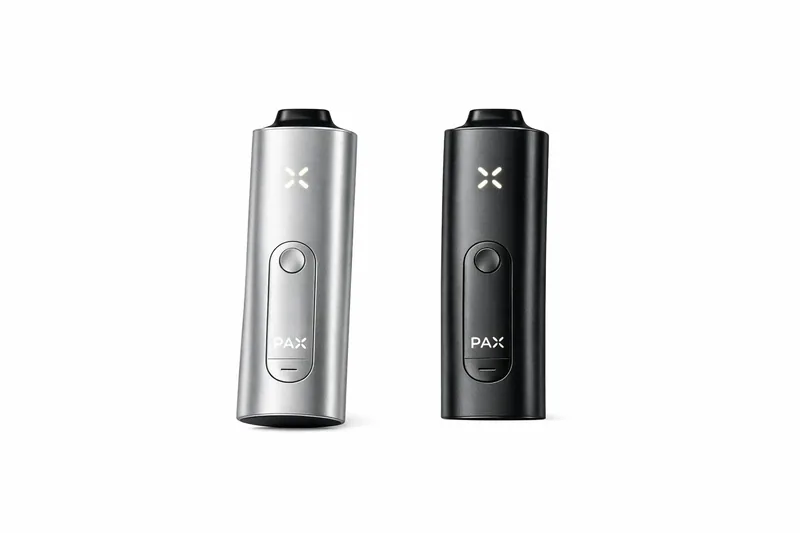
PAX Flow
★ 7.5/10PAX's design philosophy at the entry price. Hybrid heating, 4 color presets, 45-second heat-up. Cleaner vapor than the Mini 2.
PAX did for vaporizers what Apple did for phones — they proved that the device you use every day deserves to be designed well. The aesthetic, the one-button interface, the 10-year warranty: these aren't gimmicks, they're the expression of a design philosophy that has been consistent for 15+ years. PAX devices aren't the highest performers at any price point, but they're the best-designed, and for a lot of users that matters just as much.